Source To Chip To Destination
The core flow is source object to chip to destination object. A chip reads input, evaluates a formula or state, then sends an output.
Object Game Settings
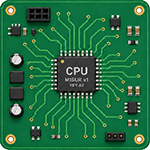
Chip settings make an object process values and events, then send the result to other objects or systems.
What it controls
Use this page as the detailed reference for the Chip group inside the Object Game Settings menu.
The core flow is source object to chip to destination object. A chip reads input, evaluates a formula or state, then sends an output.
Inputs can come from position, rotation, velocity, mass, damage, trigger-zone state, object created, object destroyed, motor events, chip output values, and more.
Outputs can change alpha, color, transform, text, trigger zones, movie frames, gun angle, joint motor speed, force, damage, gravity scale, density, friction, and other gameplay values.
A chip can act stateless, accumulate values, use constants, or generate values depending on how the chip data is configured.
How it works
These points describe what the system does after the level starts and the editor data becomes live gameplay behavior.
When Is Chip is enabled, the object is registered as a chip so other objects can connect input or output relationships to it.
When input changes or an event fires, the chip evaluates its formula chain and checks its output condition.
A chip output can drive another chip, which allows layered logic such as rotation to alpha, motor limit to trigger, or speed to damage.
Warnings help catch missing inputs, unsupported sources, bad constants, or circular dependencies before the level becomes confusing.
Setup flow
Use this checklist while building or debugging a level that uses Chip.
Give every important chip a clear object name so it is easy to select in connection lists.
Select the source object, choose the chip, and add the desired input source.
Select the destination object, choose the chip, and choose the chip output target.
Confirm one chip relationship works before adding more formulas, constants, or chip-to-chip links.
Creator guide
Build chips with explicit operands, reusable state and player input.
| Option | What it does |
|---|---|
| Debug Chip | Enable diagnostic chip output while testing connections and formulas. |
| Start Enabled | Choose whether the chip starts running when its object is created. |
| Start/Stop With Play Controls / Play Controls | Allow selected player inputs to control whether the chip runs. |
| Play Activation Phase / Play Action | Choose which input phase issues the configured start, stop or toggle command. |
| Enable Play Control Input / Play Input Source / Play Input Slot | Read a play-control value into a selected chip input slot, independently of the start/stop controls. |
| Evaluation Mode | Choose Immediate (Default) or Once Per Frame After Inputs. The latter collects input updates before the frame evaluation rather than evaluating every immediate update. |
| Chip Registers / Chip Register Initial Value | Select a register and set its starting value. Formula operands can explicitly read registers; one formula does not automatically pass its result to the next. |
| Chip Text Values / Chip Text Value | Store text values for formulas and text outputs separately from numeric constants. |
| Generator Phase Sync Input / Generator Phase Sync Phase | Choose an input slot for phase synchronization and a destination phase in the 0-1 cycle. Input 0 disables synchronization; slots 1-16 select an input. |
| Generator Phase Sync 2 Input / Phase / Generator Phase Sync 3 Input / Phase | Configure the additional synchronization inputs and their destination phases. |
| Generator Run Gate Input | Choose the input slot used to gate generator running. A populated gate value at or below 0 holds the generated value and waveform phase; resuming keeps the paused phase. |
Object position, velocity and joint values describe current state. Created, destroyed, contact and activation events produce pulses. Contact-begin and contact-end pulses carry the other object's class value.
A revolute-joint input uses radians; a prismatic-joint input uses translation in meters. Use the correct units when mapping the input to another property.
Connect Motor Limit Reached to a chip input, use a formula and an output condition that accept the pulse, then send Activate Trigger Zone to a connected zone.
Name the source and destination, test one formula, then add the next connection. Reset Inputs After Output decides whether stored values remain after an output.
Connected systems
Most Ancient Machines behavior comes from combining several settings groups together.

Trigger Zone settings turn an object into an event area or event controller that can start other gameplay changes.
Animation Settings control visual state, frame changes, movie behavior, and gameplay-driven appearance updates.

Filter Settings control alpha, blend modes, color treatment, glow, blur, shadows and stylized rendering effects.